実績
数千平方マイルにわたる30年の取り組み。
朗報は、景観と地域の再生が新しいものではないということです。それは世界の多くの地域ですでに成功裏に実証され、現在も進められています。私たちのチームのメンバーは、数百万エーカーに及ぶ、コミュニティ主導の生態系の回復と土地管理の取り組みを、数十年にわたって設計し、実施し、モニタリングしてきました。
よく記録された例としては、アメリカ南西部のMalpai Borderlands、MontanaのBlackfoot Challenge、Maine沿岸での漁業回復の取り組みのほか、世界各地の数多くの取り組みがあります。これらの経験は、景観規模の再生が単なる理想ではなく、生態系、経済、そしてコミュニティに永続的な便益をもたらしうる、実証されたアプローチであることを示しています。

Malpai Borderlands
南部New Mexico1,000,000エーカー · 2か国 · 4州 · 8郡 · 30年以上(継続中)
現在のNMパイロットと類似したバイオームと生態的文脈において、最も集中的に研究された景観規模の生態系プロジェクトの一つです。このプロジェクトのアキレス腱、すなわち2008年の金融危機後に崩壊した連邦および財団の資金への依存こそ、まさに転換ファシリティのアーキテクチャが解決するものです。
Warner GlennとKelly Glenn、牧場主。Richard Knight、Colorado State University. Curtin, C.G. (2015)、このプロジェクトを記録した査読付き書籍
Blackfoot Challenge
西部Montana2,200,000エーカー · 複数流域にまたがる協働 · 数十年
世界的に名高いマス釣りの漁場であり流域です。高い地価が、景観規模での生態系の健全性がもたらす経済的便益を反映しています。この例はまた、地域の自然資産と経済資産を支える文化的・生態的な機能を維持するうえで、コミュニティの参画と丁寧な記録がいかに重要であるかを示しています。
Charles Curtin、比較設計とモニタリング. Curtin, C.G.、Malpai BorderlandsとBlackfoot Challengeを比較した査読付き書籍
Downeast Initiative
Gulf of Maine、Downeast Maine7,500平方マイル · 沿岸の底魚とロブスターの漁業 · 2001年以来(継続中)
Downeast Initiativeは2001年以来、7,500平方マイルの沿岸地域全体にわたって底魚とロブスターの漁業を取り戻す取り組みを続けてきました。西部の土地とよく似て、沿岸の漁場にも海盆や谷や山があり、その最も高い部分が島として海面に姿を現します。資源の利用、豊かさ、そして協働による手入れという同じパターンが当てはまり、これらの営みが水域と乾燥地の生態系を通じて普遍的に見られることを示しています。
Charles Curtin、共同創設者兼科学アドバイザー。University of MaineのJim Wilson、漁業保全の専門家であるRobin AldenとTed Ames、そしてReverend Ted Hoskinsとともに。書籍
“My books explore the intersection of ecology and culture and have focused on how the world's messiness leads to uncertainty and unexpected outcomes…and what to do about it.”
The Science of Open Spaces
Island Press, 2015
This book focuses on landscape conservation as a metaphor for addressing large, complex challenges at the junction of ecology and culture.
“The book offers both inspiration and guidance. It shows that conservation - essentially, sustainability - can indeed be accomplished.”
Complex Ecology: Foundational Perspectives on Dynamic Approaches to Ecology and Conservation
Cambridge University Press, 2018
This book takes a deep dive into the foundations of complexity-based approaches to ecology and conservation, including input from more than 60 of the leading voices from across the globe.
“Complex Ecology provides an essential compass for scientists and conservationists to navigate the shifting ecological context of conservation action.”
Place-Based Solutions: The Power of Regenerative Thinking in the Face of Crisis
Johns Hopkins University Press, 2026
The point is to move beyond the resilience framing of societal challenges that largely sustain the status quo.
“Science and technology can identify environmental threats, but don’t solve them.”記事と報告書
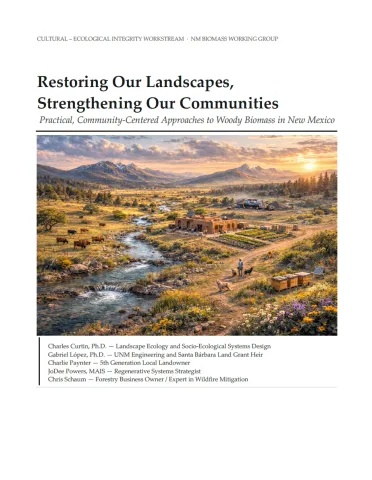
Restoring Our Landscapes, Strengthening Our Communities: Practical, Community-Centered Approaches to Woody Biomass in New Mexico
NM Biomass Working Group
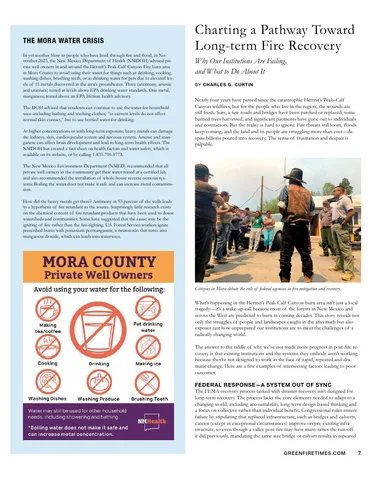
Charting a Pathway Toward Long-term Fire Recovery: Why Our Institutions Are Failing, and What to Do About It
Charles G. Curtin, Green Fire Times, January/February 2026
“The answer to the riddle of why we’ve not made more progress in post-fire recovery is that existing institutions and the systems they embody aren’t working because they’re not designed to work in the face of rapid, repeated and dramatic change.”
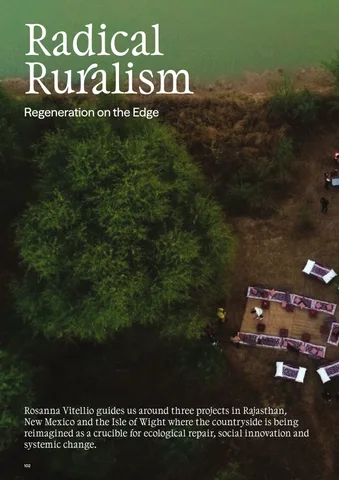
Radical Ruralism: Regeneration on the Edge
Rosanna Vitello, The Place Bureau, Meander magazine, 2025
“Author, activist and scientist Charles Curtin is confronting a landscape increasingly defined by fire.”
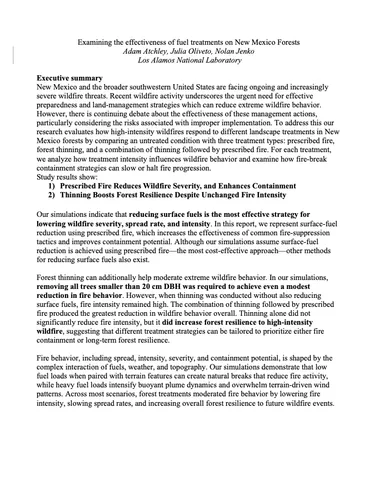
Examining the Effectiveness of Fuel Treatments on New Mexico Forests
Adam Atchley, Julia Oliveto, Nolan Jenko, Los Alamos National Laboratory
“Our simulations indicate that reducing surface fuels is the most effective strategy for lowering wildfire severity, spread rate, and intensity.”
DOCX
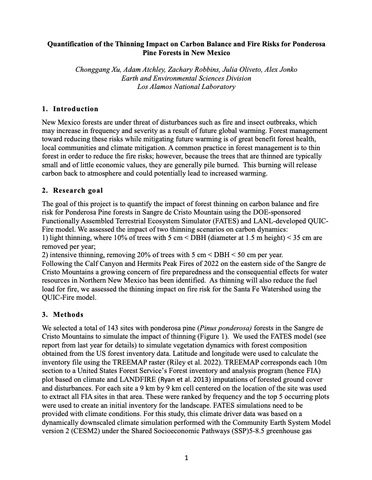
Quantification of the Thinning Impact on Carbon Balance and Fire Risks for Ponderosa Pine Forests in New Mexico
Chonggang Xu, Adam Atchley, Zachary Robbins, Julia Oliveto, Alex Jonko, Los Alamos National Laboratory, 2023
“A common practice in forest management is to thin forest in order to reduce the fire risks; however, because the trees that are thinned are typically small and of little economic values, they are generally pile burned.”
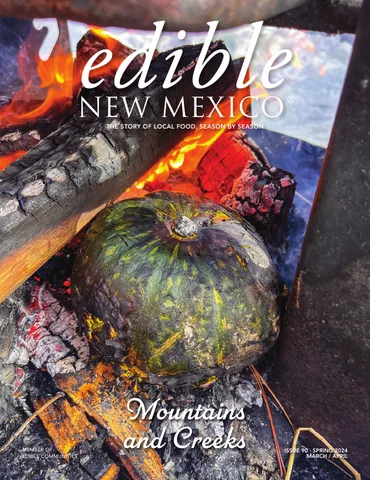
Beyond Firesheds: Fireshed-Watershed-Foodshed, Reenvisioning Agriculture in the Face of Climate Change
Charles Curtin, edible New Mexico, Spring 2024
“The Pyrocene has arrived, where a warming and drying climate leads to repeated larger and hotter fires.”
Biomass Energy in the Urban-Rural Interface, Sangre de Cristo Mountains, New Mexico
Charles Curtin, Forest Service Wood Innovation Grant Report, July 2024
“Creating carbon-negative markets to support landscape restoration and renewal is a crucial facet of wildfire mitigation and recovery.”
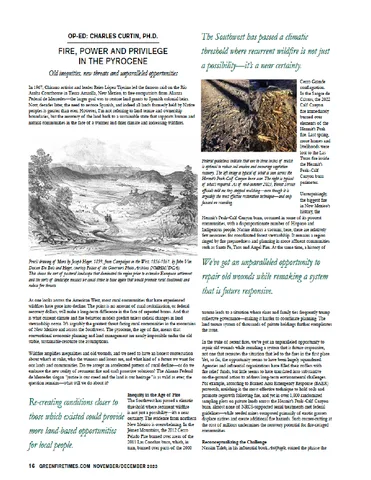
Fire, Power and Privilege in the Pyrocene
Charles Curtin, op-ed, 2023
“The Southwest has passed a climatic threshold where recurrent wildfire is not just a possibility—it’s a near certainty.”
The Sangre de Cristo Mountain Initiative: An Audacious Commonsense Proposal
Charles Curtin, Green Fire Times, November/December 2022
“We need more than short-term band-aid solutions—but also long-term strategic approaches that address causes and not just the symptoms.”
New Mexico Wildfires: The Gift That Keeps Giving
Fear and Loathing Near Las Vegas (Part 2). Charles Curtin, Green Fire Times, November/December 2022
“The water came from miles upstream, and there was no way the flooding could have been predicted, based on local conditions.”
Fear and Loathing Near Las Vegas
Personal Reflections on the Calf Canyon Fire (Part 1). Charles Curtin, Green Fire Times, September/October 2022
“It is Sunday, May 8th, just after dawn on the Cañoncito creek north of Mora, New Mexico.”
Mora County Biomass Energy Feasibility Study
Sangre de Cristo Initiative, 2021